About Kedarnath Temple
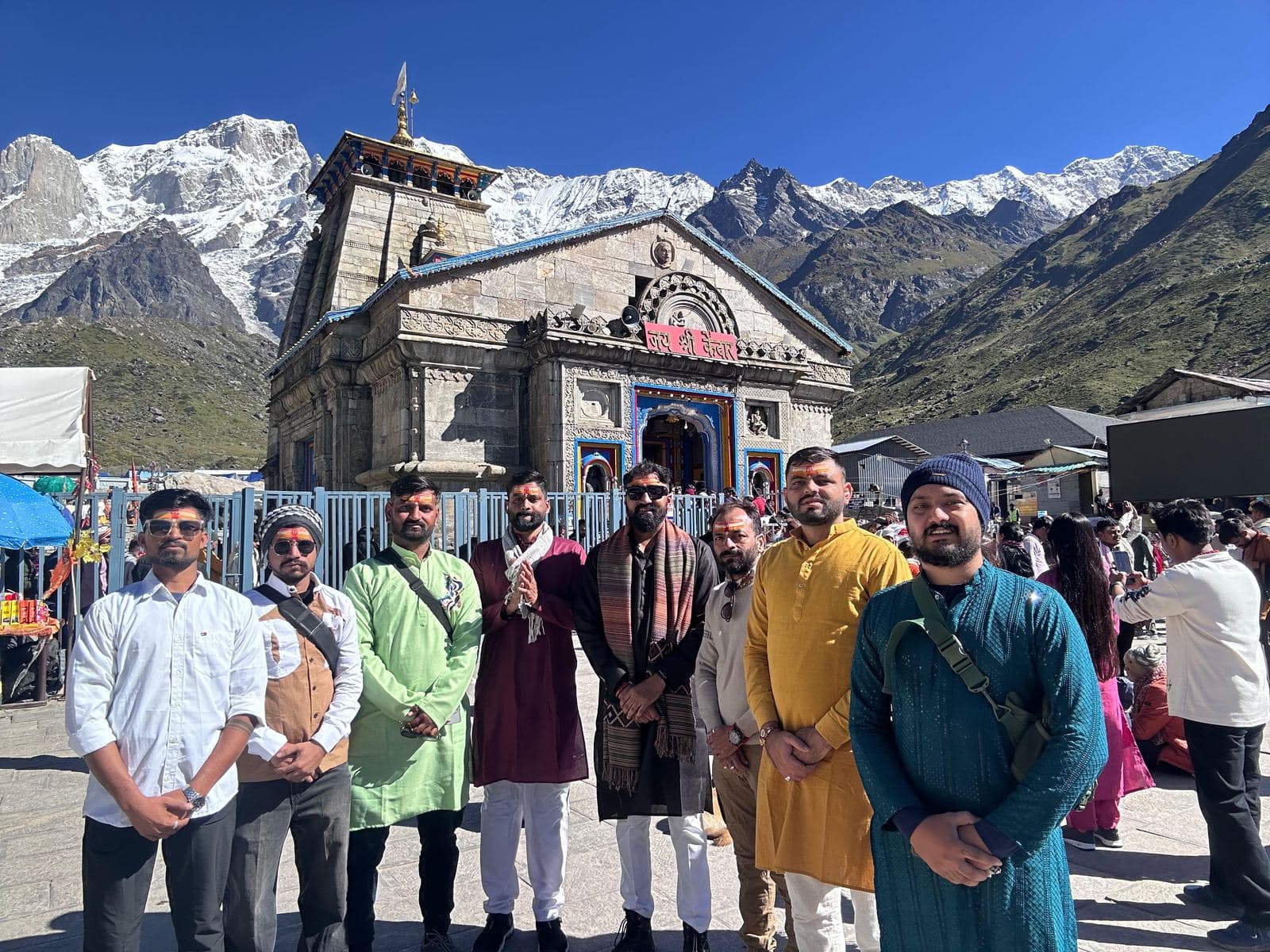
Kedarnath is one of the twelve Jyotirlingas of Lord Shiva — the most sacred manifestations of the divine in Shaivite tradition. Located at 3,583 metres above sea level in the Rudraprayag district of Uttarakhand, the temple sits at the head of the Mandakini river valley, surrounded by snow-capped peaks. The existing stone temple is believed to have been built by Adi Shankaracharya in the 8th century CE, though the site's spiritual significance dates to the Mahabharata period — the Pandavas are said to have worshipped Lord Shiva here after the Kurukshetra war.
The temple survived the catastrophic 2013 floods with remarkably little structural damage — a massive boulder from the mountain behind acted as a natural shield, deflecting the floodwaters around the shrine. Many devotees see this as a divine miracle. The temple has since been restored with a stronger infrastructure including a wider trek path, proper drainage, and emergency facilities.
Darshan Timings 2026
Types of Puja at Kedarnath
The Story Behind the Temple
The story of Kedarnath goes back to the Mahabharata. After the Kurukshetra war, the Pandavas were tormented by guilt — they had killed their own kin, including their guru Dronacharya and granduncle Bhishma. They sought Lord Shiva's forgiveness and came to the Himalayas to find him. But Shiva, who was reluctant to absolve them easily, disguised himself as a bull and disappeared into the earth at Kedarnath.
When Bhima tried to catch the bull, it began to sink into the ground. Bhima grabbed its hump — and that's the hump still worshipped in the form of the Kedarnath Shivalinga today. The rest of Shiva's body parts are said to have emerged at four other sites — Tungnath (arms), Rudranath (face), Madhyamaheshwar (navel), and Kalpeshwar (hair) — together forming the Panch Kedar pilgrimage.
Then there is the miracle of 2013. During the catastrophic Uttarakhand floods that killed thousands and wiped out entire villages, a massive boulder rolled down from the mountain directly behind the temple. Instead of crushing it, the boulder split the water flow and sat there like a shield. The temple itself had water flowing around it but the sanctum remained almost untouched. Many of our pilgrims who visit today specifically go behind the temple to see that boulder — and the emotion on their faces is something our team has described as unlike anything else on the yatra.
Places to Visit Near Kedarnath
What You'll Actually Experience on the Trek
The 16km trek from Gaurikund to Kedarnath takes most pilgrims 6–8 hours. The first few kilometres pass through tea stalls and horse handlers — it can feel chaotic and commercial. But by the time you cross the 5km mark and the forest gives way to open alpine terrain, something shifts. The Mandakini river roars below, the Kedarnath peak comes into view, and you start to understand why people have been making this journey for over a thousand years.
The last 2km before the temple, the path straightens and widens. Pilgrims who have been walking in silence for hours sometimes begin to chant spontaneously. By the time the temple comes into view — grey stone, simple, ancient, tucked between peaks — it genuinely stops people in their tracks. We have had pilgrims in their 70s tell us this moment alone made the entire journey worth every rupee and every aching step.
Wildlife & Natural Sightings
The Kedarnath Wildlife Sanctuary that surrounds the valley is one of the most biodiverse high-altitude ecosystems in India. On the trek, keep your eyes on the rocky slopes — Bharal (Himalayan blue sheep) are frequently spotted above the treeline, and their sure-footedness on near-vertical rock is genuinely humbling. The Himalayan monal, Uttarakhand's state bird, with its iridescent blue-green plumage, is spotted regularly near the base of the valley.
Snow leopards live in the higher reaches of the sanctuary. You are unlikely to spot one on the main trail, but pugmarks have been reported near Gandhi Sarovar and Vasuki Tal. In spring, the slopes below Kedarnath are blanketed with Brahma Kamal — a rare lotus-like alpine flower that blooms at high altitude and holds deep religious significance. Pilgrims who spot it in bloom consider it an especially auspicious sign.
Book Kedarnath Yatra Package
Puja booking assistance included · VIP darshan · Helicopter option · From ₹5,250
People Also Ask
The questions pilgrims most commonly search on Google about this yatra.